MICROCLIMATIC LANDSCAPE ARCHITECTURE RESEARCH LAB
About
The Microclimatic Landscape Architecture Research (MLAR) Lab was established for students and faculty at the University of Oklahoma (OU) to conduct microclimatic landscape research and design under urban climate change to provide people with comfortable living environments. Research topics include human energy budget model development and validation, human outdoor thermal health, site level design elements’ impacts on thermal comfort, thermal equitable community planning and design, and urban heat island disparity.
Contact Us
Wenwen Cheng
University of Oklahoma
Gould Hall 266
wcheng@ou.edu
(832) 836-1600
Shu Sun
University of Oklahoma
Gould Hall B57
shusuncoco@ou.edu
(979) 402-9051
Brad Anderson
University of Oklahoma
Gould Hall B57
bradley.anderson@ou.edu
(302) 535-7925
Faculty Members
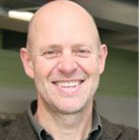
Wenwen Cheng
Director
wcheng@ou.edu
Dongying Li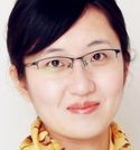
Member
dli@arc.tamu.edu
Student Members
Brad Anderson
Associate Coordinator
bradley.anderson@ou.edu
Shu Sun
Coordinator
shusuncoco@ou.edu
Research Projects
A Spatial Decision Support System for Identifying Heat Vulnerability Based on a Comprehensive Energy Budget Model and Multi-Criteria Decision Analysis in Oklahoma City, OK
The objective of this proposal is to develop an innovative index by integrating multi-dimensions of heat vulnerable indicators to reveal heat vulnerable population and locations, as well as a spatial decision support system to promote heat-related policymaking processes among different stakeholders.
Climate Resilient and Thermal Equity Schoolyards
This study will evaluate both the physical thermal environment of schoolyards and children’s thermal comfort levels for a current and future climate scenario. Climate-resilient design solutions for schoolyards will be provided. The thermal outcomes after design, referring to microclimate condition and children’s thermal comfort level of schoolyards will be simulated. Design suggestions and guidelines will be proposed and will account for children’s thermal comfort and thermal equity.
X-GEM: Enhancing Future Community Sustainability via Greenhouse Gas Emission Monitoring
Research on urban canyon impacts have investigated the role of building configurations in urban air flow and dispersal. Landscape designxiii,xiv can assist in street canyon pollutant dispersal and outdoor thermal environment management. But due to the lack of real-time GHG and meteorological data, current design methods cannot incorporate comprehensive spatial and temporal information about thermal and air quality. Leveraging 4D data assimilation/source attribution and modeling systems, we will produce new “data-driven” climate-resilient community designs to offer more thermally comfortable and healthy outdoor environment.
Sooner Pocket Weather Station
A compact and portable weather station with high quality sensors will increase metrological researchers’ working efficiency of field measurements. It can also be easily applied and installed in urban and rural locations (building faced, trees, playground, paddy field etc.) for various research purposes. This project focuses on meteorological sensors assembling with electronic prototyping platform (e.g. Arduino), meteorological device development and making (cylindrical radiometer and 6-directional UVR sensor), and data monitoring and collecting.
MLAR Lab Services
MLAR lab has scientific research level devices for meteorological data collection, GPS (Global Positioning System) tracking, and thermal image capturing. Software includes FLIR Tools, ENVI-met and PCW400 for meteorological data transmission, analysis, and simulation.
On the News
OU Big Idea Challenge Funds Five Projects to Explore Solutions to Global Grand Challenges
Five research teams at the University of Oklahoma will receive internal funding to support innovative research projects. The awards are for the OU Big Idea. Dr. Lee Fithian is Co-PI and Dr. Wenwen Cheng and Dr. Meghan Wieters are Senior Personnel on the “X-GEM: Enhancing Future Community Sustainability via Greenhouse Gas Emission Monitoring” team.
Faculty Investment Program of Climate Resilient and Thermal Equity Schoolyards
Dr. Wenwen Cheng got the Faculty Investment Program (FIP) award from the project of Climate Resilient and Thermal Equity Schoolyards.
Nature-Based Climatic Responsive Community Planning and Design: Promoting Thermal Health Under Future Climate Predictions
They got a new grant from Houston Methodist Research Institute “Nature-Based Climatic Responsive Community Planning and Design: Promoting Thermal Health Under Future Climate Predictions”
Publications
Brown, Robert D., et al. “Designing Urban Parks That Ameliorate the Effects of Climate Change.” Landscape and Urban Planning 138 (2015): 118-31. Print. Abstract.
Cheng, Wenwen, and Robert D. Brown. “An Energy Budget Model for Estimating the Thermal Comfort of Children.” International Journal of Biometeorology 64.8 (2020): 1355-66. Print. Abstract.
Cheng, Wenwen, et al. “Estimation of Individual Exposure to Erythemal Weighted UVR by Multi-Sensor Measurements and Integral Calculation.” 20.15 (2020): 4068. Print. Abstract.
Cheng, Wenwen, et al. “Approaches for Identifying Heat-Vulnerable Populations and Locations: A Systematic Review.” Science of The Total Environment 799 (2021): 149417. Print.
Cheng, Wenwen, J. O. Spengler, and Robert D. Brown. “A Comprehensive Model for Estimating Heat Vulnerability of Young Athletes.” 17.17 (2020): 6156. Print. Abstract.
Li, Fangzheng, et al. “Explore the Recreational Service of Large Urban Parks and Its Influential Factors in City Clusters – Experiments from 11 Cities in the Beijing-Tianjin-Hebei Region.” Journal of Cleaner Production 314 (2021): 128261. Print. Abstract.
Li, Fangzheng, et al. “Spatiotemporal Patterns of the Use of Urban Green Spaces and External Factors Contributing to Their Use in Central Beijing.” 14.3 (2017): 237. Print. Abstract.
Liu, Zhixin, et al. “Heat Mitigation Benefits of Urban Green and Blue Infrastructures: A Systematic Review of Modeling Techniques, Validation and Scenario Simulation in Envi-Met V4.” Building and Environment 200 (2021): 107939. Print. Abstract.
Cheng, Wenwen (2020). “Design of Thermally Comfortable and UVR-Healthy Schoolyards for Children in Low Latitude Urban Areas in North America (College Station, Tx).“ Doctoral dissertation, Texas A&M University. Available electronically from https : / /hdl .handle .net /1969 .1 /192223.
Evidence-based Restorative Environment: Research Progress and Design Inspirations
Z WANG, W CHENG, H WANG – Landscape Architecture, 2015
